
Monster engines are the beating hearts of high-performance machines, whether they’re in drag racing cars, monster trucks, or heavy-duty performance vehicles. These engines are built for extreme power, speed, and durability. What makes them capable of handling such intense demands lies in the design and quality of their individual parts. Each component in a monster engine plays a vital role, and together they form a mechanical system capable of delivering massive horsepower and torque that regular engines simply cannot match.
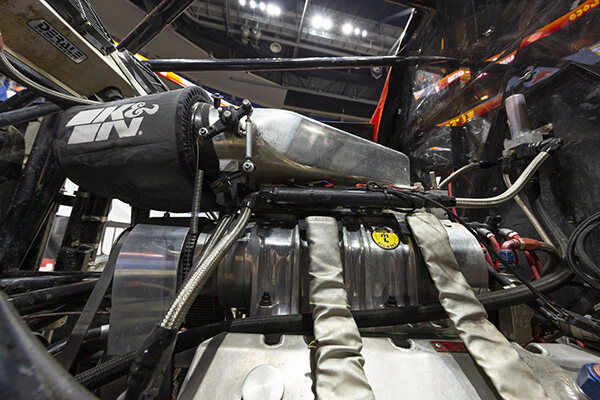
At the core of a monster engine is its block, which houses the cylinders and forms the foundation performance engine parts of the engine. Unlike standard engine blocks, those used in monster builds are often made of reinforced cast iron or high-grade aluminum alloys to withstand the enormous pressure and heat generated during operation. Within the block are oversized pistons, specially designed to handle high compression ratios. These pistons are forged rather than cast, providing the strength needed to endure explosive combustion cycles that occur under intense loads.
Crankshafts in monster engines are built to transfer huge amounts of force from the pistons to the drivetrain. Made from forged steel or billet materials, they are precision-balanced to reduce vibration at high RPMs. The camshaft, another key part, controls the timing of the engine’s valves and is engineered for aggressive lift and duration profiles to allow maximum air and fuel into the combustion chambers. This increased airflow is essential for producing extreme power output.
Monster engine heads are no less important. Cylinder heads are usually custom-machined for high flow, with larger valves and polished ports to ensure efficient fuel-air mixing and exhaust expulsion. Many use multi-spark ignition systems and advanced valve materials to handle higher engine speeds and thermal stresses. Turbochargers or superchargers are often integrated to force additional air into the system, dramatically increasing power without needing to expand engine size.
The intake and exhaust systems in a monster engine are specially tuned for performance. High-flow intake manifolds and headers are used to maximize air delivery and reduce backpressure. This helps maintain smooth airflow through the engine, contributing to its ability to rev higher and produce more horsepower. Additionally, high-capacity oil and cooling systems are essential to keep all moving parts within safe operating temperatures, especially under racing or extreme performance conditions.
Fuel delivery systems in monster engines are also built to perform. High-pressure fuel pumps, oversized injectors, and performance-tuned ECU mapping ensure that the right amount of fuel is delivered at exactly the right time. Every detail, down to the gaskets, bolts, and seals, is carefully selected for strength and reliability.
Building a monster engine is both a science and an art. Each part must not only be high-quality on its own but also work in harmony with the others. The result is an engine that can roar to life with a force that shakes the ground and commands attention. It’s a marvel of mechanical engineering, designed not just to run—but to dominate.